Watercolor Farm Animals Clipart Review
As a designer who has spent years translating digital art into tangible thread, I approach every new asset with a critical eye. When I first opened the Watercolor Farm Animals Clipart Pig Horse Cow Chicken Barn Ship Rooster Clipart file, my immediate reaction was to assess its potential for real-world application. This collection falls under the Illustrations category, but in our world of machine embroidery, an illustration is only as good as how it translates from pixel to stitch. The mood here is undeniably soft and nostalgic, capturing that rustic charm that customers love on handmade products. However, the watercolor aesthetic presents specific challenges that any serious crafter or small business owner must navigate before hitting the "start" button on their machine.
The First Impression: Soft Edges vs. Stitch Reality
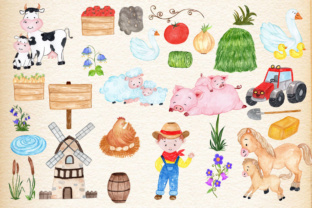
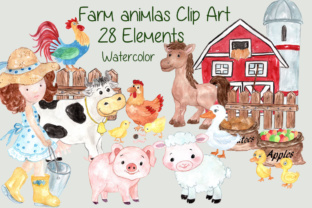
The visual personality of the Watercolor Farm Animals Clipart Pig Horse Cow Chicken Barn Ship Rooster Clipart is gentle and organic. Unlike sharp vector line art, these designs rely on gradients, blended colors, and irregular edges to mimic paint on paper. For a digital product seller creating printable mockups, this is a dream. But for an embroidery project, it requires a shift in strategy. When I visualize stitching a pig or a rooster from this set onto a fabric background, I immediately think about stitch density and fill stitch techniques. To replicate that watercolor bleed without turning the design into a muddy blob, you need to be strategic with your thread colors.
I recently considered using the barn and cow elements for a custom embroidered tote bag intended for a local farm-to-table shop. The goal was to create a boutique product that felt artisanal rather than mass-produced. In this scenario, the Watercolor Farm Animals Clipart Pig Horse Cow Chicken Barn Ship Rooster Clipart offered the perfect thematic fit. The challenge lay in ensuring the soft edges didn't get lost during digitization. If you simply convert the image directly, you risk losing the delicate transitions that make the watercolor style work. Instead, I would recommend treating these as applique design candidates or using very fine running stitch overlays to suggest the texture of paint without over-stitching the area.
Real-World Application: From Tote Bags to Baby Items
Let's talk about where this design actually shines. I see immense potential for custom apparel, particularly on sweatshirts and heavy cotton tees. The rustic theme pairs beautifully with the texture of a heather grey sweatshirt embroidery project. Imagine a baby onesie featuring the pig or chicken; the softness of the watercolor style complements the innocence of baby embroidery perfectly. It avoids the harsh, corporate look of standard clipart, making it ideal for personalized gifts and nursery decor.
For an Etsy seller looking to expand their catalog, this collection could serve as the backbone for a holiday embroidery line. Think of kitchen towels with the rooster or aprons featuring the barn. These are practical items where the design needs to stand up to frequent washing. Here is the catch: watercolor effects can sometimes look washed out if the fabric texture is too coarse. On a linen tea towel, the design might blend in too much, whereas on a smooth cotton poplin, the colors will pop. I always advise testing the design on scrap fabric first to see how the machine embroidery design interacts with the weave of the material.
Another strong use case is the embroidered patch. Because the animals have distinct shapes, they can be isolated and stitched onto a backing fabric, then attached to hats or bags. This method allows you to control the final look more precisely. You can choose a contrasting background color for the patch itself to make the watercolor elements of the Watercolor Farm Animals Clipart Pig Horse Cow Chicken Barn Ship Rooster Clipart stand out, ensuring high visibility and professional presentation.
Navigating the Challenges: Where Caution Is Needed
While the aesthetic appeal is high, there are scenarios where this specific style demands extra caution. Small hoop sizes are a major red flag. Watercolor details often rely on subtle shading that disappears when scaled down. If you try to fit the horse or the ship into a 4x4 inch hoop, the intricate blending may turn into a solid block of color, losing the artistic intent entirely. Always check your hoop size requirements against the original artwork dimensions before committing to a finished product.
Dark fabrics also present a significant hurdle. Watercolor art typically relies on white or light backgrounds to show transparency and layering. Stitching these designs on black or navy blue garments without a proper underlay or stabilizer can result in a design that looks flat and dull. You might need to add a satin stitch border or a dense fill underneath to lift the colors, which increases the stitch count and time per project. For commercial embroidery, where efficiency matters, this added step needs to be factored into your pricing model.
Furthermore, curved surfaces like caps require careful planning. The barn and ship have straight lines and right angles that might not drape well on the curve of a baseball cap. Distortion can occur, warping the watercolor effect. In such cases, I recommend simplifying the design or choosing the animal characters, which generally have more organic shapes that adapt better to curved surfaces.
Practical Designer Notes for Success
If you decide to move forward with the Watercolor Farm Animals Clipart Pig Horse Cow Chicken Barn Ship Rooster Clipart, follow these practical steps to ensure a professional outcome:
- Test on Scrap Fabric: Never skip the test run. Stitch the design on a piece of the actual fabric you plan to use. Check if the fill stitch covers the background evenly and if the watercolor gradients are visible.
- Review Thread Contrast: Ensure your chosen thread colors provide enough contrast against the fabric. A light pink pig on a white shirt might vanish unless you use a slightly darker shade or add a shadow stitch.
- Inspect Small Details: Zoom in on the rooster's comb or the ship's rigging. Are these details too fine for your machine? If so, consider simplifying them to prevent thread breaks or puckering.
- Use Proper Stabilizer: For textured fabrics or stretchy materials like jersey, a cutaway stabilizer is essential to keep the shape of the watercolor blobs intact.
- Check Licensing: Before selling finished items or digital products, confirm the licensing terms. Some digital embroidery file licenses restrict commercial use or limit the number of items you can sell.
- Create Mockups: Use printable mockup tools to visualize the design on various products. This helps you spot potential issues with scale and placement before you spend hours stitching.
Final Verdict: A Versatile Asset with Nuance
The Watercolor Farm Animals Clipart Pig Horse Cow Chicken Barn Ship Rooster Clipart is a valuable addition to any designer's library, provided you respect its unique characteristics. It offers a level of warmth and creativity that standard geometric clipart cannot match. For the craft business owner aiming to create high-end, personalized gifts, this collection provides the visual language needed to stand out in a crowded market.
However, success lies in the execution. By understanding the limitations of the watercolor style in embroidery—particularly regarding scale, fabric choice, and thread density—you can transform these illustrations into stunning handmade products. Whether you are decorating a holiday gift, branding a small shop product, or fulfilling a custom order, taking the time to prepare the embroidery file correctly will pay off in customer satisfaction and brand consistency. Treat this design not just as a picture to be stitched, but as an artistic element that requires thoughtful integration into your embroidery project. With the right approach, the result is a finished product that feels both professional and deeply personal.