Watercolor Hawaii Clipart for Embroidery
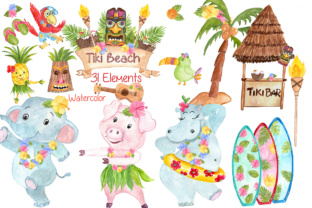
As a designer who has spent years translating digital art into tangible thread, I approach every new asset with a critical eye. When I first opened the file for Watercolor Hawaii Clipart, my immediate reaction was one of visual delight followed by a practical assessment of its stitchability. The mood it sets is undeniably tropical and relaxed, capturing that soft, dreamy aesthetic often associated with island life. However, the transition from a watercolor illustration to a machine embroidery design requires careful consideration. This piece falls under the category of Illustrations, but in our world, an illustration is only as good as how it performs when the needle hits the fabric.
The Visual Personality and First Impression
At first glance, Watercolor Hawaii Clipart exudes a sense of fluidity. The edges are soft, the colors blend seamlessly, and the overall composition feels organic rather than rigid. For a craft business looking to sell items with a boutique feel, this is exactly the kind of visual personality that stands out on social media. It suggests a handmade product that is thoughtful and artistic. However, watercolor effects are notoriously tricky in embroidery. The challenge lies in replicating those subtle gradients without creating a muddy mess of fill stitch. If you are planning to use this for custom apparel, you need to understand that the "bleed" effect of paint must be simulated through clever thread layering or specific stitch techniques.
I immediately thought of a project: a high-quality cotton tote bag for a local beach shop. The idea was to place the Watercolor Hawaii Clipart prominently on the front. In my mind's eye, the soft blues and greens of the clipart would pop against the natural beige canvas. But before committing to the final finished product, I had to run through the mental checklist of potential pitfalls. Would the delicate details hold up? Would the colors look distinct enough?
Real-World Application: From Screen to Fabric
When evaluating how Watercolor Hawaii Clipart performs in real-life scenarios, the context of the garment matters immensely. For sweatshirt embroidery, the texture of the fleece can sometimes swallow fine details. Watercolor designs often rely on negative space and thin lines to create their ethereal look. On a thick, looped fabric like a sweatshirt, those thin lines might get lost unless you increase the line weight or use a contrasting thread color strategically.
Conversely, for lighter projects like baby embroidery or a delicate nursery pillow cover, the softness of the design is a major asset. A personalized gift featuring this clipart on a onesie or a receiving blanket feels gentle and appropriate for a newborn. The lack of harsh, geometric lines makes it perfect for items meant to be cuddled. Similarly, for a holiday embroidery project, perhaps a summer-themed holiday card or a festive kitchen towel, the tropical vibe adds a unique twist that moves away from traditional seasonal motifs.
If you are an Etsy seller or running a small shop, the versatility of this design is key. You could adapt it for an embroidered patch to sew onto denim jackets, creating a cool, retro surf vibe. Or, you could scale it down for a cap design, though that brings us to the limitations of hoop size and detail retention. The design assets provided here are beautiful, but they demand respect for the medium of thread.
Navigating Technical Challenges
There are specific areas where Watercolor Hawaii Clipart needs to be used with caution. Small hoop sizes are the enemy of complex watercolor effects. If you try to squeeze the entire scene into a 4x4 inch hoop, the intricate blending will likely turn into a solid block of color, losing all the nuance that makes the illustration special. Always check your hoop size requirements before purchasing or using the file.
Textured fabrics and stretchy materials also pose a risk. On jersey knit or spandex, the tension required for a dense stitch density can cause the fabric to pucker, distorting the flow of the watercolor shapes. Thin fabrics might show the backside of the stitching, ruining the clean look of the front. Dark fabrics require a backing layer or a different approach to thread colors to ensure the light pastel tones of the watercolor remain visible. Without proper contrast, the design will disappear into the background.
Furthermore, curved surfaces like caps can distort the layout. The organic shapes of the Watercolor Hawaii Clipart might look warped if not placed correctly on a dome. Detailed corners and tiny lettering, if included in the full set, should be scrutinized. In embroidery, tiny text often stitches out poorly, becoming illegible blobs. If this design includes any script or small words, test them thoroughly.
Designer Notes for Professional Results
To truly make Watercolor Hawaii Clipart work, you must treat it like a professional digital embroidery file that requires testing. Never skip the step of stitching a test run on scrap fabric. This allows you to see how the threads interact and whether the stitch density is too heavy or too light. Check the thread color contrast against your intended fabric; what looks vibrant on a screen might look dull in person.
Use the right stabilizer. For watercolor effects, which often involve multiple layers of fill, a cut-away stabilizer might be necessary to prevent shifting and puckering. Inspect the small details after the test run. Are the gradients smooth, or do they look jagged? Test the design in black and white mockups first to see if the value structure holds up without color distraction. Compare how it looks on light versus dark fabric backgrounds to determine its best use case.
Before selling finished items, confirm the licensing terms. Just because you bought the illustration does not automatically mean you have commercial rights for the embroidered version. Ensure you are cleared for commercial embroidery if you plan to sell small shop products or handmade products at craft fairs. Also, consider the buyer engagement. A well-executed tote bag design using this clipart tells a story and invites customers to imagine themselves on vacation. It adds significant value to the finished product, elevating it from a simple commodity to a piece of wearable art.
In conclusion, Watercolor Hawaii Clipart is a powerful tool for creative entrepreneurs, provided you respect the technical limitations of embroidery. It offers a unique aesthetic that can differentiate your brand, but it demands precision in execution. By testing thoroughly, choosing the right fabrics, and understanding the behavior of thread, you can transform this digital art into a stunning, tactile reality that your customers will love.